Throughout the long line of ministers to officiate in Kilcluney Parish Church,
all have had an impact on the church and the spiritual life of the congregation.
Within that rich tradition, one name stands out as having carved his legacy into
the very fabric of the church. That man was the Rev.Henry Hutchings.
The son of Robert Hutchings of County Wexford Henry was born on September 17th
1818. Educated at Trinity College Dublin Henry Hutchings attained his BA degree
in 1844. Finding his vocation within the church the young Henry Hutchings acquired
his Divinity Testimonium in 1845 and completed his MA degree in 1874.
Having completed his education, Rev.Hutchings was appointed as Curate of Skerry
and Racavan in Ballymena. He remained there until 1875 when he became Perpetual
Curate of Charlemont. Two years later Hutchings became Rector of Kilcluney Parish
and there found his home.
In establishing himself as Rector of the Parish Rev.Hutchings sought to lead by
personality. Desiring to promote greater freedom of worship Rev.Hutchings asked
the vestry to allow the participation of a robed choir in the services. Owing
to the traditional stance of the Established Church the vestry refused his request.
Displaying characteristic individuality Rev.Hutchings set about designing and
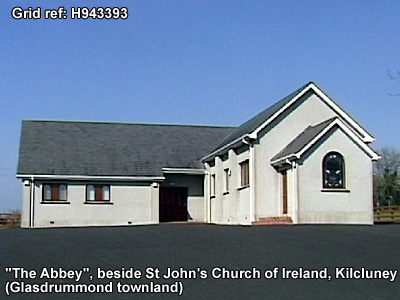
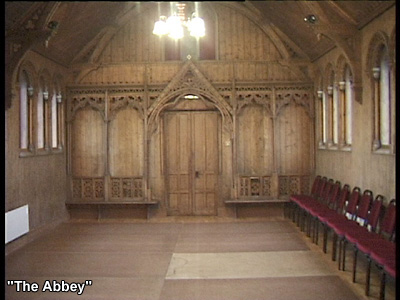
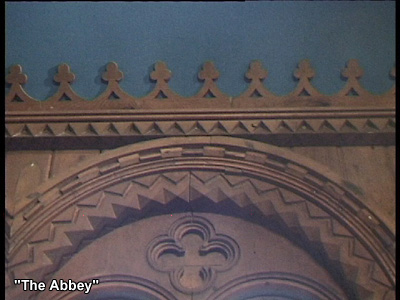
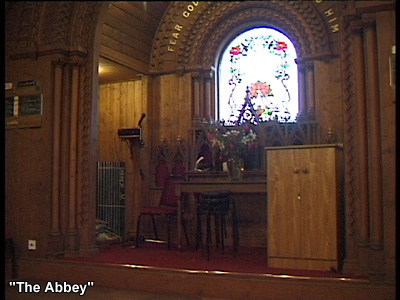
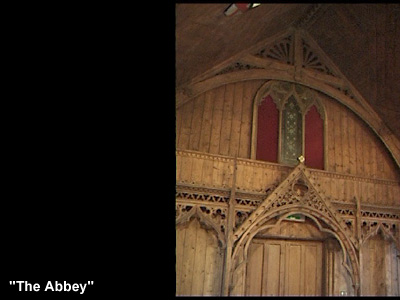
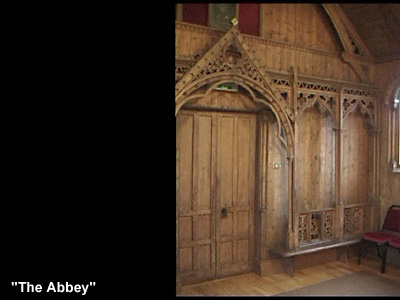
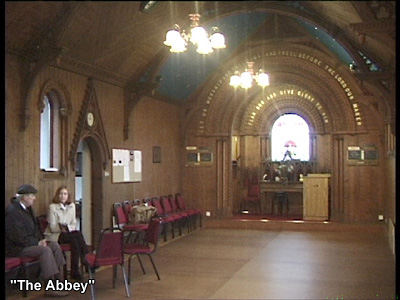
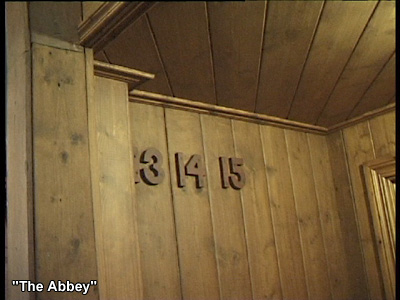
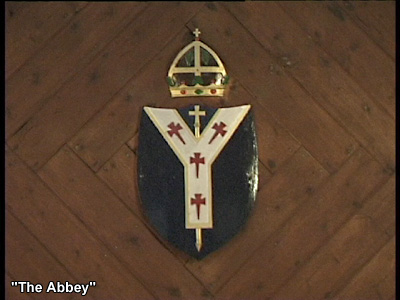
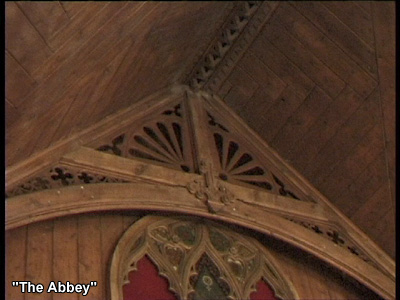
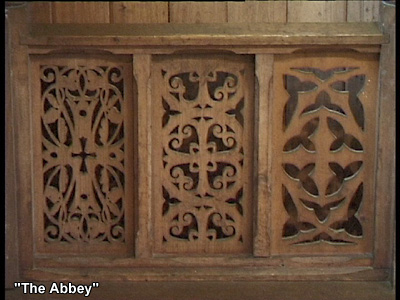
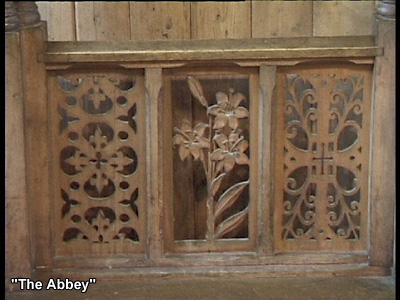
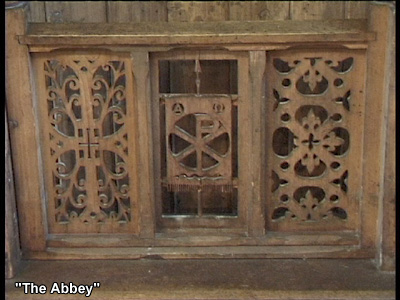
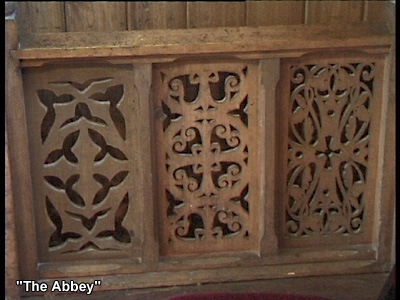
constructing a separate church building. 'The Abbey', as it became known, was
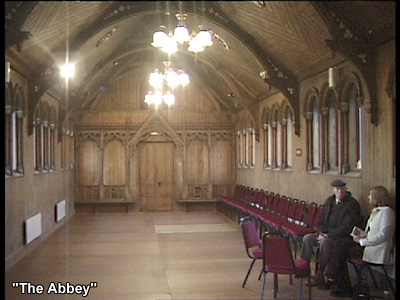
described in the Irish Ecclesiastical Gazette as "the most elaborate and
intricate wooden building in the kingdom". The Rev. W. P. Magee, the Rector
of Kilmore, opened it in November 1890. In this building, worship was conducted
free from the restrictions of the prayer book and with the aid of a robed choir.
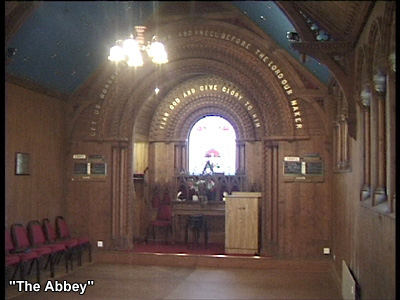
By the initial design, the building was divided into three bays by elaborate carved
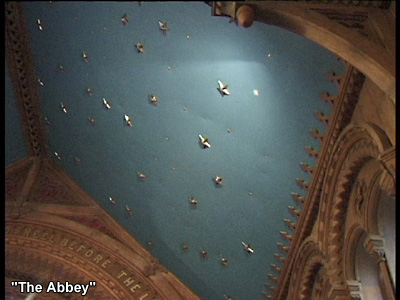
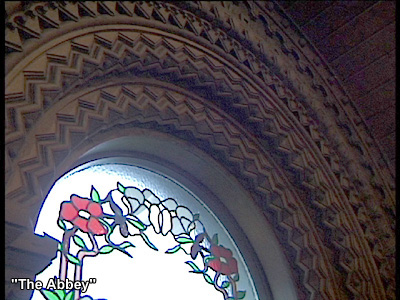
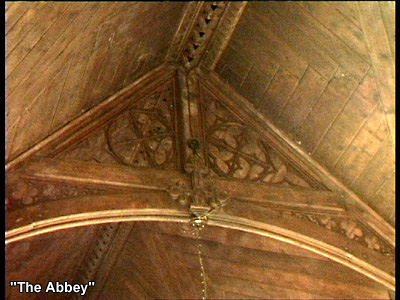
screens. The central feature of the building was a hiberno-romanesque arch and
the blue chancel roof adorned with silver stars. Also on the ceiling were placed
two rows of heraldic crests, representing the dioceses of Ireland. The minister
with the aid of his youngest daughter performed all the carving.
'The Abbey' was used for worship until the 1960's but is now home to the Parish
Bowling Club. In 1994 the building was carefully dismantled and brought to rest
within the new church hall beside the church. The building was dedicated on September
16th 1995.
Rev. Hutchings' influence is evident also within the parish church. The pulpit
and communion rails of the church were handcarved by the minister and commemorate
the crucifixion of Christ. The fine fretwork lends an historical aspect to the
building and focuses the minds of the congregation on the central pillar of the
Christian faith.
The life of Henry Hutchings is commemorated in the stained glass windows to the
front of the church, representing nativity, resurrection and ascension. They were
dedicated to Rev.Hutchings' memory in 1896, the year of his retirement. The inscription
reads,
A silver plate within the church was the gift of Rev.Hutchings to the congregation
in Easter 1885.
In fact, Rev.Hutchings was held in such esteem by his congregation that when he
fell behind in the tillage of the glebe land his parishioners brought their horses
and families to complete the work for the minister. This demonstration of kindly
feeling was recorded in the Irish Ecclesiastical Gazette immortalising the extent
to which the parishioners revered their minister.
Rev.Hutchings' legacy was not confined to his church and congregation. Married
to Charlotte Wall Rev.Hutchings was father to five children; Arthur Theodore,
Edgar Fitzhenry, Rebecca Maryanne, Rowena Charlotte Louise and Eva Elinor Drusilla.
Edgar followed his father into the ministry and in fact succeeded his father as
Rector of Kilcluney Parish Church. Henry's youngest daughter conducted the robed
choir. Under her direction they excelled and were known throughout the county
as "Hutchings' Angels".
In addition to his church and family commitments, Rev.Hutchings also found the
time to publish several books on a variety of subjects. His works included;
Rev.Hutchings retired in 1896 handing pastoral care of the parish to his son. Upon retirement he wrote to the choir,
The minister died only a few short years later on November 11th 1899 but his presence has endured throughout the generations of the church.
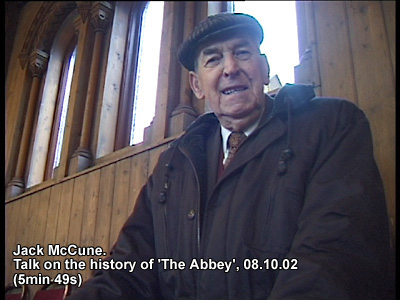
In the accompanying recording, Jack McCune talks about 'The Abbey' beside St. John's, Kilcluney.
Use the audio controller to listen to this talk, given in 2003.